Optical vs SAR for a wildfire trigger: which imagery settles the payout
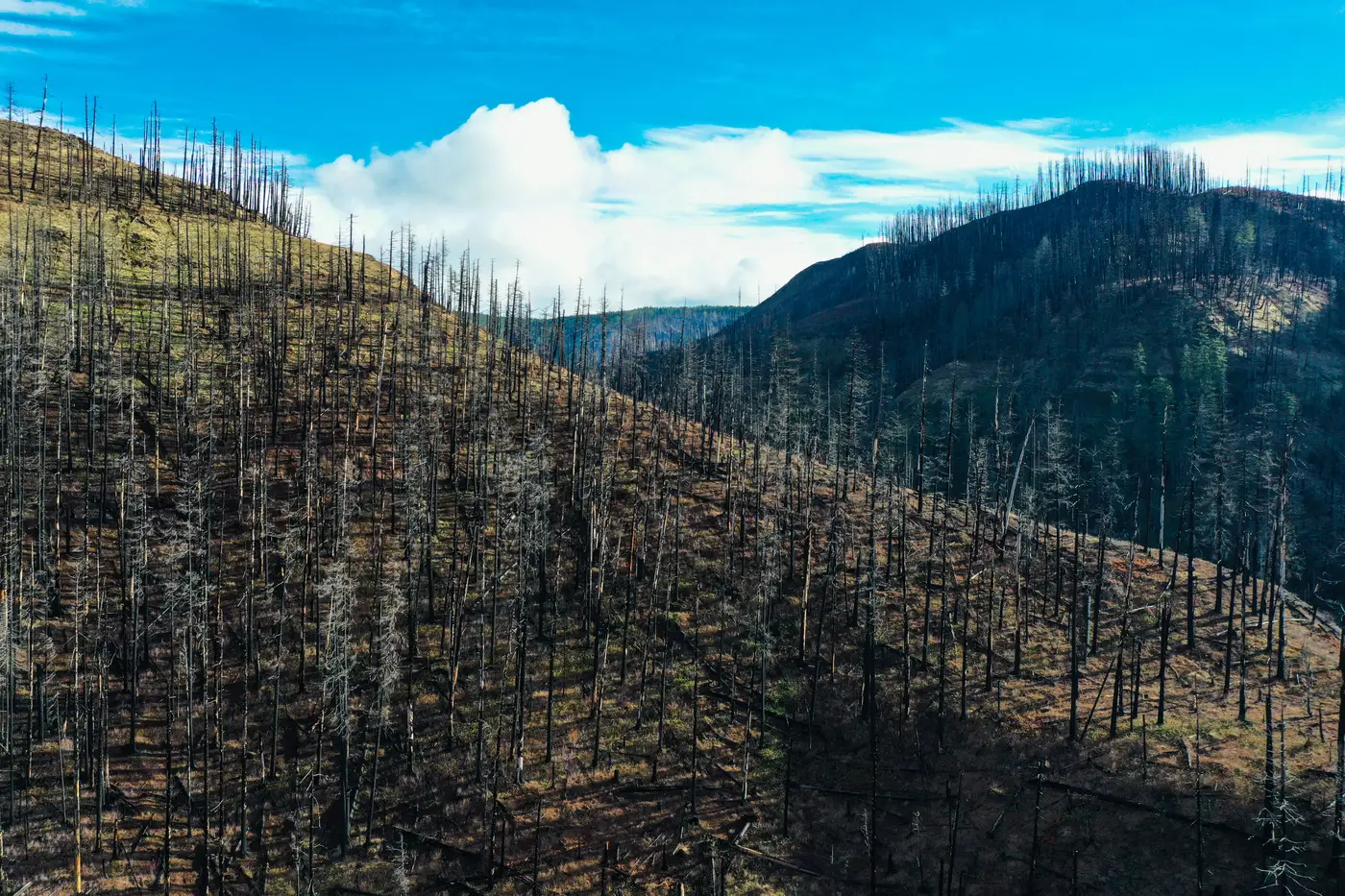
If you're drafting trigger language for a parametric wildfire contract, the optical-versus-SAR question usually comes up during the second or third redline, right around the time someone asks "what happens if it's smoky for a week." It's worth settling early, because the two imagery types don't disagree on accuracy so much as on what each one is measuring.
What SAR sees
Synthetic aperture radar sends its own signal down and reads what bounces back, so it doesn't care about cloud, smoke, or whether the satellite pass happens at 2am. For a fast-moving fire front that matters. Radar is reading surface roughness and moisture, which change once vegetation burns, but pulling a clean burn perimeter out of a SAR scene takes a trained analyst working against pre-fire baselines, and the backscatter signature of a burn scar can resemble other surface changes depending on terrain and vegetation type. It's a real tool, but reading it takes real time.
What multispectral optical sees
Optical sensors read reflected sunlight across bands, including near-infrared and shortwave infrared, which is where burned vegetation shows up on its own terms. Healthy canopy reflects strongly in near-infrared; scorched ground doesn't. That spectral drop is the basis for burn-severity indices the fire science community has used for decades, and it's why a before/after optical pair tends to produce a burn footprint that's legible without a specialist translating radar returns for you. The catch, and it's a real one, is cloud and smoke. If the scene is obscured, optical has nothing to read until the sky clears.
The cloud cover problem, and what it means for your trigger wording
This is the part that belongs in the contract wording, separate from the imagery debate. A parametric trigger written around "satellite confirmation within 24 hours" is writing a check the weather might not let anyone cash. Wildfire season smoke plumes can sit over a fire complex for days, and a single narrow-swath pass that gets clouded out just pushes the read to the next pass.
Two things help. First, a wide-swath platform increases the odds that some portion of a scheduled or event-triggered pass finds a clear sightline into the burn area even when the core of the fire is still smoking. Second, the trigger window in the contract should be written around "first clear observation after the qualifying event" rather than a fixed clock, with the imagery timestamped so both sides can see exactly which pass the read came from and when it was taken. That's a drafting fix more than a technology fix, and it's the one that prevents a dispute later.
So which one, for a wildfire trigger
For burn footprint delineation, where the question is how much ground burned and how severely, multispectral optical is the more direct read: the spectral signature of burned vegetation is what you're actually trying to measure, and a before/after pair makes the footprint visible without an interpretation layer in between. The cloud cover limitation is real, and it should shape your trigger window and event definition rather than get written around with an unrealistic turnaround clock.
Trigger Verification works from wide-swath multispectral imagery for exactly this reason: a before/after read of the peril footprint, triggered on the qualifying event, timestamped so the counterparty can't argue about which satellite pass the settlement is based on.
If your contract still needs a neutral third party to point a sensor at the burn scar and say when it happened, that's the conversation worth starting now, before the next fire season makes it urgent.